

DTEK Dnipro Grids reinforces its crews to eliminate grid failures
Difficult situation in the energy system of the region, application of emergency power cuts and long-lasting power outages lead to a several-dozens-fold increase in the number of failures. The main cause ‒ grid overload once the electricity is restored. This causes fuses, transformer equipment, and switchboards in the buildings to burn out.
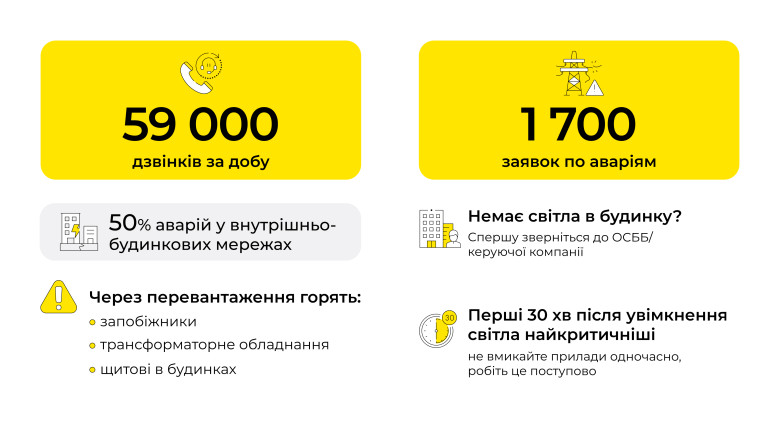
Yesterday alone, the company received 59,000 calls. Of which, almost 1,700 requests were related to failures that require repairs. At the same time, half of the requests received is related to failures on the grids of DTEK Dnipro Grids. The rest is related to the issues in the building’s internal networks, for which the balance holders of the buildings ‒ managing companies and homeowners associations (HOA) – are responsible.
Currently, all company’s resources are directed at reacting to emergencies and eliminating failures as quickly as possible. We have reinforced our crews and are primarily working with balance holders in order to restore electricity faster.
If there is a power outage in your building, first contact the managing company or HOA to check the state of the building’s internal networks.
Additionally, we urge residents to use electricity after its restoration responsibly. The first 30 minutes after restoration of power are especially critical. Do not switch on all electrical appliances at once, especially the high-power ones. Connect them gradually not to create excessive load on the grid and to avoid new outages.