


Over a thousand lines repaired: how energy workers maintained the light during the heating season
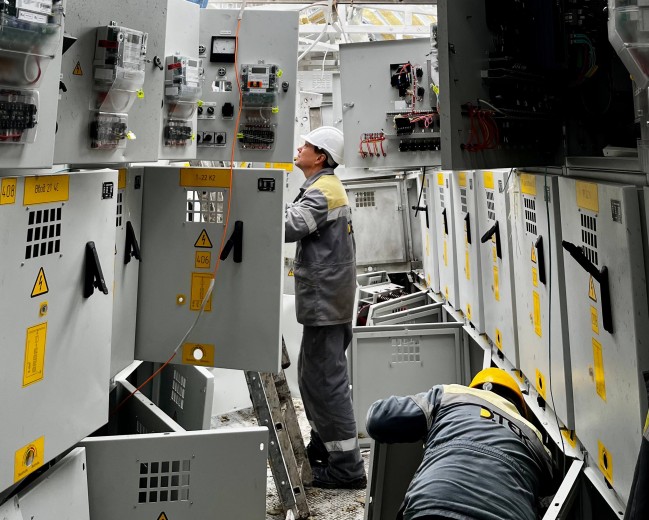
The 2025/26 heating season was the most difficult of all the years of the full-scale war. The enemy had been systematically attacking the energy infrastructure at all levels — from power generation facilities to distribution and transmission. From November 2025 to April 2026, a total of 147 power facilities and 1,029 power lines with the total length of more than 4,000 km, were damaged in the capital and in Odesa, Kyiv, Dnipropetrovsk and Donetsk region.
More than 600 crews worked almost 24/7, commencing work immediately after obtaining permission from the military and the emergency service. Thanks to the coordinated work, energy workers managed to restore over 98% of the damaged grids before the end of the heating season. The works are ongoing.
Weather conditions became an additional challenge. Frosts with temperature as low as -20°C, which is abnormal for Ukraine, led to a sharp increase in electricity consumption, causing overloads, emergencies and constant electricity shortage. As a result, stabilization or emergency power shutdowns had to be applied almost daily during the heating season, and energy workers had to eliminate dozens of equipment failures.
For Kyiv, specialists even had to temporarily apply a new type of schedules, as the old approach was no longer applicable for large-scale destruction of power facilities and CHPP. In order to provide Kyivans with an opportunity to plan their lives, individual power shutdown schedules had to be applied – for every individual building and its capacity to receive electricity.
“We have been thoroughly preparing for the 2025/26 heating season throughout the year. We have upgraded more than 10,500 km of overhead power lines, more than 7,000 cable lines, almost 9,000 substations, transformer and distribution points. We have invested a total of almost 5 bln hryvnias. However, large-scale enemy attacks on all of the energy system and extreme frosts made this heating season a true challenge. We worked in the conditions of repeating destruction and record loads. But thanks to fast decisions and coordinated work, our teams managed to maintain controllability of the energy system and prevent large-scale collapse,” — noted DTEK Grids CEO Alina Bondarenko.
Currently, DTEK Grids DSO are already preparing the grids for the next heating season in order to enhance its reliability in the face of new challenges.